Willa Klein · 7 September 2026
Guild Formation Patterns in Virtual Environments and Their Impact on User Retention
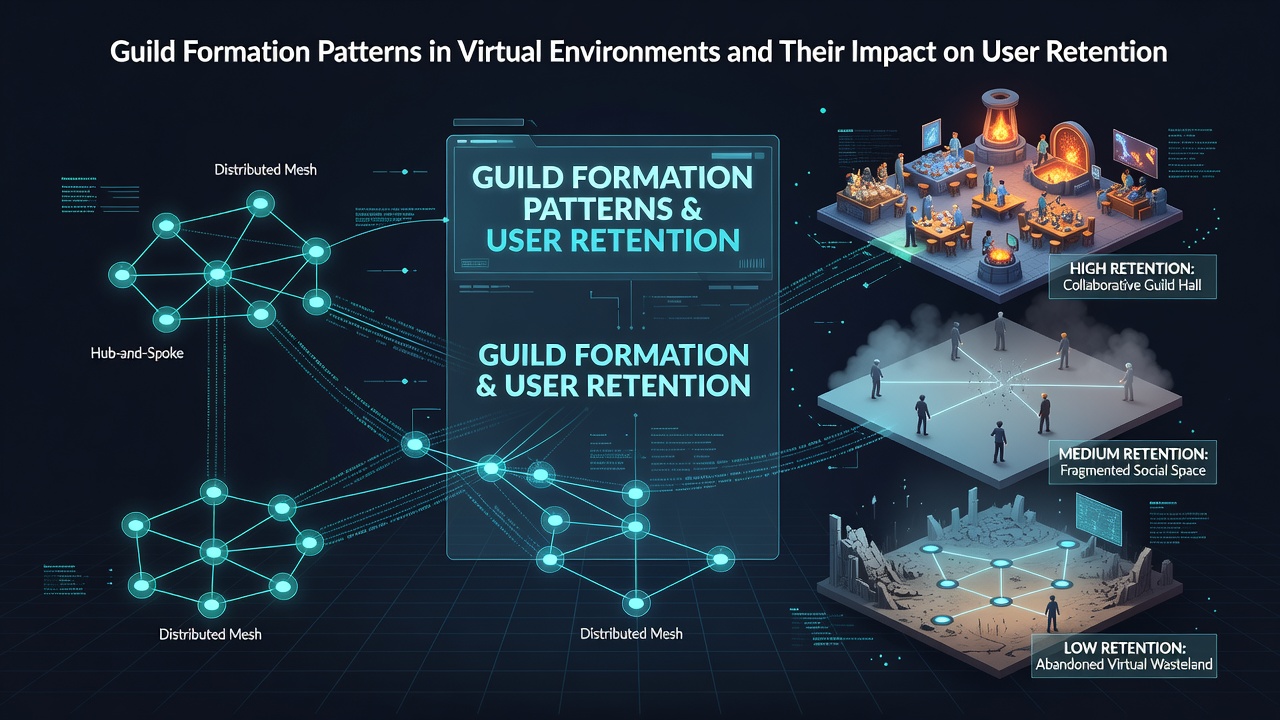
Virtual environments have hosted structured player groups known as guilds for decades, yet the specific patterns through which these groups emerge continue to shape how long participants remain engaged with a platform. Researchers tracking multiplayer online games and social simulations report that guilds form along several recurring pathways, including spontaneous alliances among new users, deliberate recruitment by experienced players, and algorithmic suggestions built into platform tools. Data from large-scale virtual worlds shows that these formation routes correlate with measurable differences in user retention rates over periods of three to twelve months.
Common Guild Formation Pathways
Studies of platforms such as massively multiplayer online role-playing games reveal three primary formation patterns that appear consistently across regions. Spontaneous guilds arise when players meet through shared quests or random encounters and decide to formalize their cooperation without prior planning, while structured guilds develop when veteran users actively scout and invite newcomers using in-game chat channels or external forums. Platform-assisted guilds form when the system itself matches players based on activity logs or stated interests, a method that gained wider adoption after updates rolled out in late 2025. Observers note that spontaneous groups often begin with fewer than ten members yet expand rapidly when early successes create momentum, whereas platform-assisted formations tend to reach stable sizes more quickly because the matching process filters for compatible schedules and skill levels.
Retention Metrics Across Formation Types
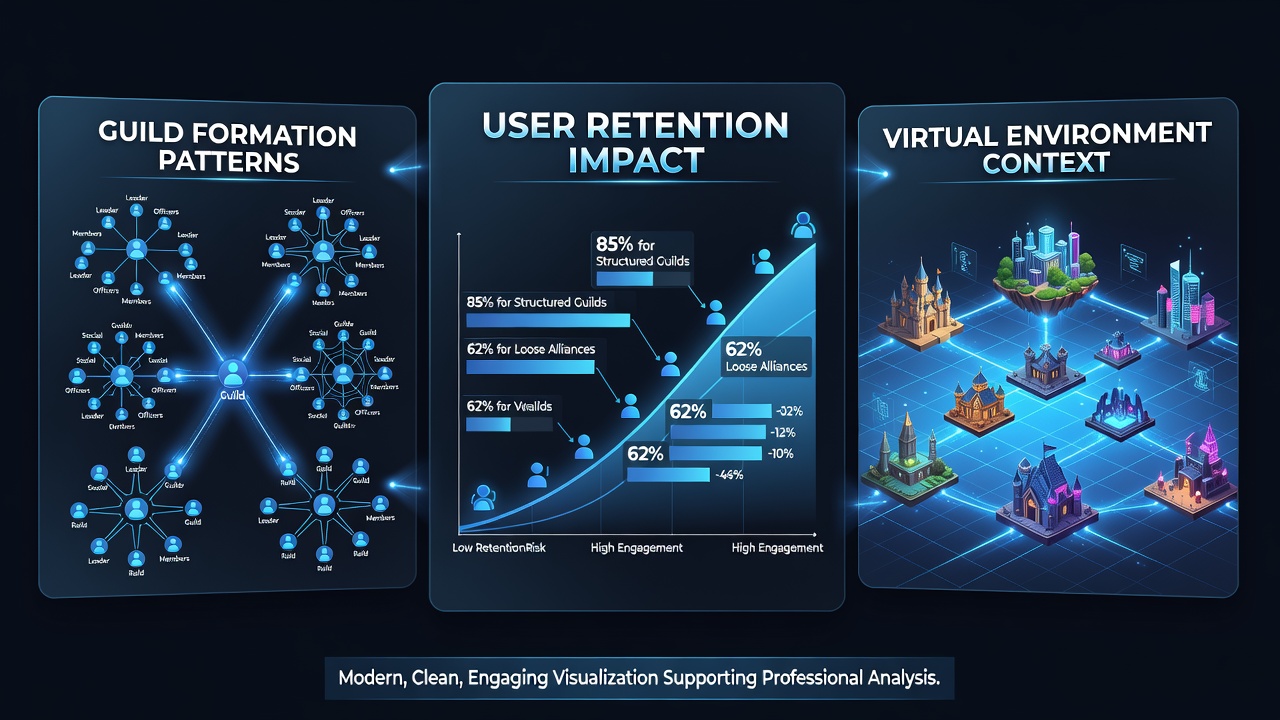
Retention data collected from multiple virtual environment operators indicates that users who join guilds within the first seven days of account creation show higher continued activity at the thirty-day and ninety-day marks compared with solo players. Figures from industry reports compiled by the Entertainment Software Association demonstrate that guild members maintain login streaks 1.8 times longer on average than non-guild participants during the same timeframe. The pattern holds across North American and European servers, while Australian platforms report similar ratios when tracking users who joined structured guilds rather than spontaneous ones. Those who enter platform-assisted guilds exhibit slightly lower early churn rates, although long-term retention beyond six months aligns closely with figures from organically formed groups once initial novelty fades.
Regional Variations Observed in 2026
In September 2026 platform analytics released by European operators highlighted that guilds formed through external community sites retained members at rates comparable to in-game recruitment, provided the external groups maintained active voice channels and scheduled events. Canadian research initiatives tracking user behavior in educational virtual simulations found that guilds emphasizing collaborative project goals retained participants longer than those focused solely on competitive rankings. These findings emerged from aggregated logs covering several hundred thousand active accounts and were cross-referenced with survey responses collected at regular intervals.
Structural Features That Influence Longevity
Guilds that establish clear role hierarchies and recurring event schedules demonstrate stronger retention outcomes according to longitudinal studies conducted by university research teams. Members who receive defined responsibilities within the group, such as resource coordination or event planning, log in more frequently and report higher satisfaction scores in follow-up questionnaires. Platforms that provide tools for guild leaders to track member participation and distribute rewards see reduced turnover within the first quarter after formation. Conversely, guilds lacking organized activities experience steeper membership declines after the initial three-month period, a trend documented across both North American and Asian server populations.
Platform Design Choices and Their Effects
Design decisions around guild creation interfaces affect which formation patterns dominate on any given platform. Environments that lower barriers to group registration see higher volumes of spontaneous guilds, while those that integrate recruitment tools into the core interface produce more platform-assisted groups. Data released by the International Game Developers Association in mid-2026 indicated that retention improvements appear most pronounced when platforms allow flexible guild size limits and provide persistent communication channels that survive member departures. Operators who experimented with temporary guild trial periods observed that participants who converted to permanent membership after the trial retained activity levels comparable to users who joined established guilds from the outset.
Conclusion
Patterns of guild formation in virtual environments continue to correlate with distinct retention trajectories, as evidenced by platform data and academic analyses gathered through 2026. Spontaneous, structured, and platform-assisted pathways each produce measurable differences in how long users remain active, with early guild membership generally supporting longer engagement windows. Regional studies and industry aggregates confirm that structural features such as role assignment and scheduled events further modulate these outcomes, offering platform designers concrete factors to consider when refining group systems.